


There’s a rare kind of peace that only arrives when you run and realize — no one’s watching. No eyes tracking your pace. No metrics waiting to be posted. No quiet competition disguised as motivation.
Just you, your breath, and the rhythm of motion.
I used to crave that invisible crowd — the likes, the segments, the validation that said I was improving. But somewhere along the miles, that silent applause turned heavy. Running began to feel less like freedom and more like performance.
Now, when I step out before sunrise, it’s different. I don’t think about proving anything. I don’t think about who might see. I just move — quietly, deliberately, freely.
That’s the quiet beauty of running without an audience: rediscovering what running feels like when the performance ends and the purpose returns.
Because in those empty roads and early shadows, I’ve learned something I wish I knew sooner — the best runs aren’t the ones that impress others.
They’re the ones that bring you home to yourself.
The Pressure to Perform
Somewhere along the rise of running apps and social feeds, running stopped being private. Every step became a record, every run a quiet broadcast of progress. I told myself it was about accountability, but deep down, I knew I’d started running for validation.
Each post came with invisible expectations — pace, distance, consistency — a subtle scoreboard that turned joy into measurement.
I began to run not just to feel alive, but to appear consistent. Every run that wasn’t impressive felt like a failure, even when it was exactly what my body needed.
It’s a strange kind of pressure — the kind you carry silently. You tell yourself no one’s judging, yet part of you keeps checking, keeps comparing.
The need to prove becomes so familiar that you mistake it for motivation.
But over time, something in me started to resist. The act of running began to feel heavier, not because of the distance, but because of the performance.
I realized that the weight I was carrying wasn’t physical — it was the quiet burden of being seen.
And then came the relief of realizing the truth: no one is really watching. The world is far too busy with its own chaos to care about my pace or my form. The only person who ever judged me was me.
When that understanding sank in, the pressure cracked open. I stopped glancing at my watch every few minutes. I stopped caring about whether today’s run looked “impressive.”
That’s when the rhythm returned — raw, unfiltered, honest.
Running became simple again — a space that belonged entirely to me, untouched by noise or comparison. It was the first step back toward running and solitude, even if I didn’t recognize it yet.
Running for Yourself Again

When the pressure faded, I began to notice something I’d long forgotten — the stillness that lives beneath motion. The run no longer needed to prove anything; it simply existed. And so did I.
Without the constant urge to share or compare, the miles felt softer, fuller. There was no audience, no digital applause — just a quiet return to presence. Each stride became a conversation between body and breath, a dialogue that didn’t need words or validation.
That’s the true benefit of running alone: it teaches you to listen again. To your heartbeat. To your breathing. To the subtle rhythm that says, this is enough.
There’s a clarity that arrives only in that silence — the kind that thinking can’t produce. Thoughts that once raced began to stretch out and breathe. What felt tangled slowly loosened, mile by mile, until peace took its place.
That’s the essence of running for mental clarity — when the movement untangles what the mind cannot.
I realized then that running had always been more than exercise. It was a return to awareness, to truth, to self. The more I ran without needing to be seen, the more I saw who I really was.
Running became meditation in disguise. Each step, a breath; each breath, a reminder that motion can be its own kind of stillness.
It wasn’t about escaping the noise anymore. It was about learning to move through it — quietly, freely, and completely alive.
When Silence Becomes Healing
There’s a moment in every quiet run when the world fades — no music, no noise, just the steady rise and fall of breath. That’s when movement turns inward. What began as routine becomes ritual, and step by step, the mind starts to quiet itself.
This is what I’ve come to call running meditation — the art of finding stillness without stopping. Thoughts drift in and out like passing scenery, yet somehow, peace lingers. I don’t chase it; I simply keep moving until it finds me.
In those moments, the run stops feeling like effort. It becomes a rhythm that carries you, a pulse that steadies everything uncertain. Problems don’t disappear, but they soften. You see them differently, like waves you no longer need to fight.
That’s the quiet magic of running as therapy. It doesn’t need a diagnosis, or even a reason — just movement and honesty. Some days, it’s where I process what words can’t reach.
Other days, it’s where I learn acceptance: that not every problem needs fixing, not every wound needs explaining.
Healing doesn’t arrive at the finish line. It arrives in the middle of an ordinary run — somewhere between the inhale and the exhale — when you realize you’re no longer running from pain but through it.
It’s strange how silence can become medicine. The same solitude that once felt like emptiness now feels like space — room to breathe, to heal, to simply exist without expectation.
Building Emotional Strength in Solitude
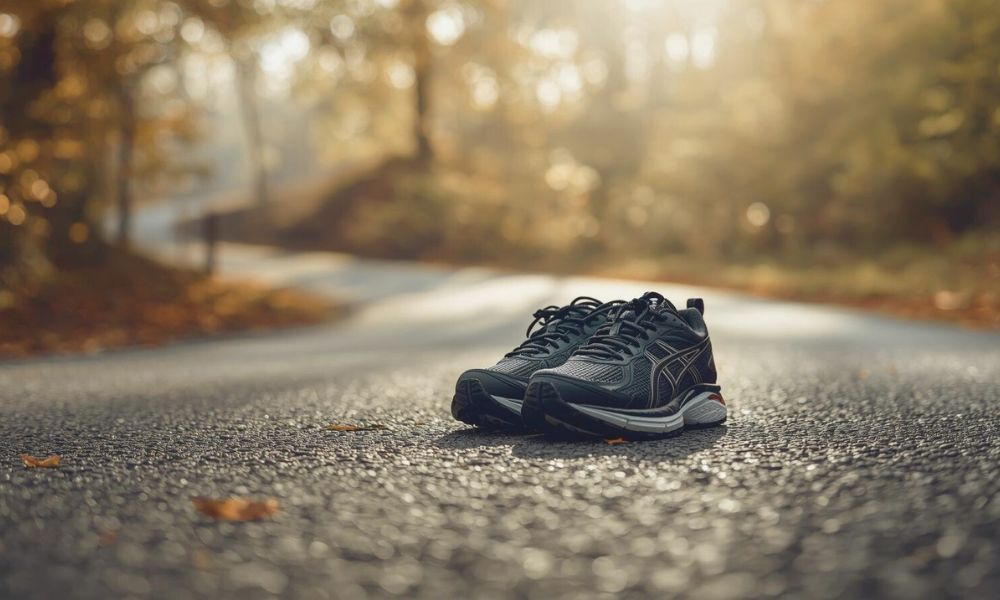
Not every run feels effortless. There are mornings when my legs feel like lead and my mind tries to bargain its way out of motion. Those are the runs that test more than fitness — they test faith.
The quiet kind you have in yourself.
When you strip away the metrics, the audience, and the noise, you’re left with a simple question: Will I still show up when no one’s watching?
Each time the answer is yes, something inside grows stronger. Not in muscle, but in spirit.
That’s the real essence of running emotional resilience — learning to face discomfort without collapsing under it.
Every tough run becomes a rehearsal for life’s harder moments: the disappointments, the fatigue, the slow climbs that seem endless.
Through solitude, you learn to sit with struggle instead of escaping it. You start to understand that endurance isn’t just physical; it’s emotional discipline. It’s choosing to stay steady when your mind tells you to quit.
Running has taught me that resilience is quiet. It doesn’t boast or announce itself. It’s built in the unseen miles — the ones where you push through the weight of doubt and still find rhythm on the other side.
And when the world feels too loud, the act of running becomes a reminder: strength doesn’t always roar. Sometimes, it’s just the sound of steady footsteps moving forward, one breath at a time.
From Loneliness to Connection
There was a time when the quiet used to scare me. Long solo runs felt like reminders of how alone I was — each empty stretch of road echoing the same thought: Why am I doing this by myself?
But over the months, that feeling began to shift. The silence I once feared started to feel different — not hollow, but alive. I realized that running and loneliness are not the same thing.
Loneliness is absence; solitude is presence. One drains you, the other fills you.
Out there, in the rhythm of my own breath, I started to feel something I hadn’t felt in years — connection. Not to the crowd, not to the world, but to myself.

Each run became a small act of return. I stopped needing conversation to feel understood, or applause to feel seen. The road became enough. The sunrise became enough. The steady sound of my shoes became enough.
Somewhere along those miles, running changed my life. Not through speed or distance, but through perspective.
It taught me that peace doesn’t always come from company; sometimes, it comes from learning how to be whole on your own.
Now, when I run, I no longer feel like I’m escaping the world. I feel like I’m part of it — moving with it, breathing with it, quietly aligned.
The solitude that once felt like a wound has become a sanctuary.
The Joy of a Run That’s Yours Alone
These days, I no longer chase validation or post every run. The road has become my quiet companion again — no competition, no performance, just rhythm.
I run before the city wakes, when the air is still soft and the only applause comes from my heartbeat.
There’s freedom in that simplicity.
Freedom from the need to impress, to compare, to prove.
When the metrics fade and the noise disappears, what’s left is the essence of running itself — movement, breath, presence.
Running without an audience isn’t about hiding; it’s about remembering. Remembering why you started. Remembering how it feels when running belongs entirely to you.
Each step is a conversation with the self you once ignored — the one that doesn’t need numbers or praise to feel worthy. Out here, the pace doesn’t matter. What matters is the peace that follows.
Sometimes the best runs aren’t the fastest or the longest. They’re the ones no one knows about — the quiet miles where you meet yourself again and realize that solitude was never the enemy. It was the teacher.
And as the sun climbs over the horizon, you feel it — that gentle, wordless truth:
You were never running to be seen.
You were running to be free.