


When you reach your 40s, loneliness takes on a quieter shape. It doesn’t come with drama or breakdowns — it just settles into the small spaces of life. The drive home. The early mornings.
The nights when the house is finally silent. You function. You show up. But somewhere underneath, you feel that familiar ache of carrying everything on your own.
I didn’t start running to fix that feeling. I started because I needed a place where the noise stopped and the expectations loosened.
I didn’t expect that running and loneliness would eventually meet in the same breath — or that those slow, solitary miles would become the most honest part of my day.
Little by little, running changed my life. Not with a dramatic transformation, but with a quiet shift I only noticed once I looked back: being alone no longer felt like something to escape.
It started feeling like a strength. Like clarity. Like freedom.
This is how solitude — the thing I once feared — became the place where I finally felt whole.
When Running Became My Safe Place
Loneliness Wasn’t the End — It Was the Beginning
In the early days, running felt awkward. My breath was uneven, my legs were heavy, and every minute alone with my thoughts felt like a confrontation I wasn’t ready for.
But I kept showing up, not because I loved it yet, but because it was the only part of the day that belonged entirely to me.
Somewhere in those early miles, something subtle shifted. The quiet stopped feeling uncomfortable. The distance stopped feeling empty.
And I began to understand what I wrote in my piece on running and solitude — that being alone isn’t the enemy. It’s the doorway.
Running became the one place where nothing was expected of me. I didn’t need to talk. I didn’t need to perform.
I didn’t need to explain why I preferred slipping into the dark morning streets instead of chasing noisy social routines that never felt like home.
What started as an escape slowly turned into a sanctuary. The road listened without judging. The silence held me without pressure.
And for the first time in years, solitude didn’t feel like something happening to me — it felt like something I could choose.
The Benefit of Running Alone: Space to Hear Your Own Thoughts

Most people avoid being alone with their thoughts. As an introvert in my 40s, I learned to make peace with it — but running took that peace to a different level.
When you run by yourself, there’s no noise to hide behind. No conversations to maintain. No pressure to match anyone’s pace. It’s just you, your breath, and the steady rhythm of your footsteps.
That’s the real benefit of running alone: it gives you space to process the things you ignore in everyday life. The quiet becomes a mirror. You notice emotions you’ve been suppressing. You untangle frustrations without forcing anything.
You think more clearly — not because you’re trying to, but because the movement naturally shakes the mental clutter loose.
Some days, the run feels like a reset. Other days, it feels like a release. But almost every time, I finish with a sense of lightness I couldn’t find anywhere else.
It’s clarity without effort, therapy without talking, and freedom without explanation.
Running alone didn’t just help me cope with loneliness — it helped me understand myself better than any conversation ever could.
Running for Mental Clarity: The Quiet Reset Button
There’s a moment in every solo run where the noise of life finally slips away. It doesn’t happen instantly — it arrives slowly, like a fog lifting.
One minute your mind is busy replaying worries, deadlines, and conversations; the next, everything softens into calm focus.
That’s the hidden power of running for mental clarity.
It clears your mind without asking for permission.
Maybe it’s the rhythm of your cadence. Maybe it’s the steady breath. Maybe it’s the simple truth that movement pulls you back into the present moment. But somewhere in those miles, your thoughts begin to organize themselves.
The problems feel less sharp. The world feels less overwhelming. You start seeing things as they are, not as your stress makes them seem.
For me, these quiet resets became essential. As someone in my 40s juggling responsibilities, expectations, and the emotional weight of adulthood, mental clutter builds up fast.
Running became the one place where everything aligned — not because life got easier, but because my mind got clearer.
And in that clarity, loneliness stopped feeling like a weakness.
It started becoming a lens — a way to understand myself without distortion.
Running Meditation: Stillness Hidden Inside Motion
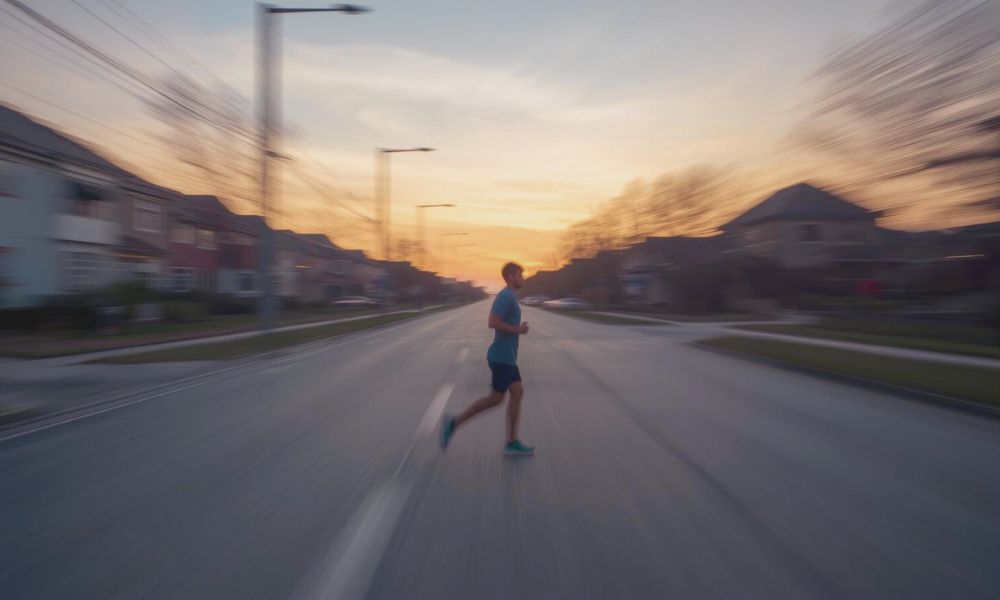
There’s a point in a run where everything just… clicks.
Your breathing steadies.
Your stride smooths out.
Your mind stops chasing a hundred different thoughts.
It’s not something you force — it’s something you fall into. This is what many runners quietly describe as running meditation, and it became one of the most surprising gifts of my solitary miles.
In those moments, the world narrows to a few simple truths: the sound of your footsteps, the rhythm of your breath, the soft, steady pull of forward motion.
You’re moving, yet completely still inside. It’s the kind of presence most people try to find in yoga studios or mindfulness sessions, but I discovered it on empty streets at dawn.
Loneliness loses its harsh edges here.
Silence feels like a friend instead of a reminder that you’re on your own.
And for a few perfect minutes, every worry dissolves into the simple act of being alive and moving.
These meditative stretches didn’t just calm me — they began to teach me something deeper: solitude wasn’t draining me; it was restoring me.
When Running Becomes Therapy Without You Realizing
I never set out looking for healing. I’m in my 40s — at this stage, you learn to carry things quietly. You deal with stress, disappointment, and emotional weight the same way you handle work deadlines: you push through.
But something shifted the longer I ran alone.
The miles didn’t just clear my head — they opened it.
Without planning it, I started processing things I had ignored for years. Regrets. Fears. Memories I kept buried because life left no time to feel them.
Out there on the run, without distractions, feelings surfaced naturally and left just as naturally. That’s the quiet truth about running as therapy: it doesn’t require you to talk, confess, or analyze. It simply gives your emotions room to move.
Some days, I finished a run with a sudden lightness I couldn’t explain. Other days, I felt the sting of tears I didn’t see coming. But every time, I came home a little more grounded — a little more myself.
Running didn’t fix everything.
But it became the place where I finally let myself feel again, honestly and without judgment.
And that was the beginning of real healing.
Running Emotional Resilience: Strength Built in Silent Miles
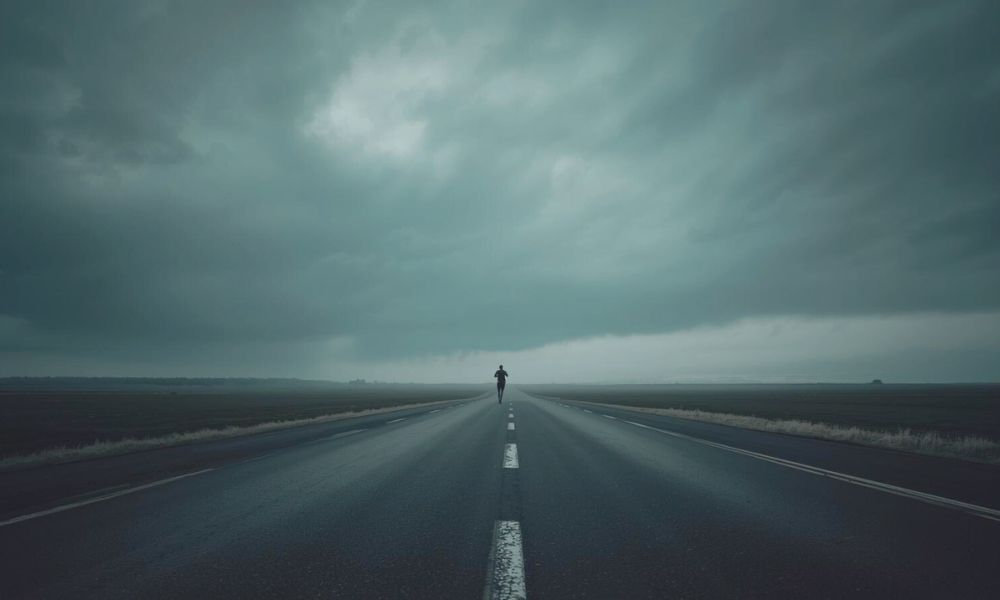
There’s a different kind of toughness that forms when you run alone. It’s not about pace, distance, or medals.
It’s the quiet strength that grows when no one is watching — when you keep going even though stopping would be easier, when you face your thoughts instead of outrunning them.
That’s the heart of running emotional resilience.
Solo miles have a way of revealing who you are when everything is stripped down. When you’re tired and your legs are heavy, you learn patience.
When doubt shows up mid-run, you learn to breathe through it instead of collapsing under it. When a wave of loneliness hits unexpectedly, you learn to hold it without fear.
And as an introvert in my 40s, this resilience didn’t just stay on the road — it followed me into real life.
I became calmer under pressure.
More grounded during conflict.
Less shaken by the noise of the world.
Running alone taught me that resilience isn’t built by pushing harder — it’s built by staying present, steady, and honest with yourself when the miles get uncomfortable.
The strength you grow in solitude becomes the strength you carry everywhere.
Running Without an Audience: Why It Matters More Than People Think
There’s a unique freedom in doing something without applause, validation, or anyone checking your progress. In my 40s, that freedom became one of the greatest gifts of solo running.
When no one is watching, you’re not performing. You’re not comparing. You’re not proving anything. You’re simply running for yourself.
That’s the quiet beauty of running without an audience — the effort becomes pure.
You learn to trust your own pace instead of chasing someone else’s. You learn to listen to your body instead of external expectations.
You learn to show up consistently, even when no one knows you did, which is a level of discipline most people will never understand.
And for introverts, this kind of privacy isn’t isolating — it’s liberating.
There’s no pressure to socialize mid-run.
No small talk to drain your energy.
No awkwardness in falling behind or pulling ahead.
Just you, the road, and the honesty of your own effort.
The miles you run privately are the ones that shape your character. They become the foundation of your confidence — not the loud, showy kind, but the steady, grounded kind that grows from knowing you’re strong when no one else is there to see it.
When Loneliness Turns Into Real Liberation
Where I Finally Felt Free
Somewhere along the years, loneliness stopped feeling like an empty space. It stopped feeling like something I needed to distract myself from.
The more I ran alone, the more I realized that being by myself wasn’t the problem — it was the story I attached to it.
Through the quiet miles, I began overcoming loneliness through running in a way I never expected. Not by replacing it, but by understanding it.
Loneliness wasn’t a sign that I didn’t belong. It was a signal that I needed room to breathe, to reset, to come back to myself.
And that’s the transformation I never saw coming:
Solitude became something I could step into instead of something I tried to avoid.
Runs that once felt heavy began to feel like freedom. Silence that once stung began to feel soothing. And slowly, mile after mile, I started finding peace in solitude — the kind of deep, quiet peace that doesn’t need noise or company to feel full.
This liberation didn’t come from changing my life dramatically.
It came from accepting that being alone wasn’t a flaw in my story.
It was the space where I finally learned how to be whole.
Solitude Was Never the Weakness — It Was the Strength I Didn’t Know I Had
Looking back, I realize the transformation didn’t happen in one breakthrough moment. It happened slowly, mile by mile, in the quiet places where I finally stopped running away from myself.
Loneliness didn’t disappear — it evolved.
It became gentler.
Clearer.
Easier to hold.
Running showed me that the parts of life we fear the most often become the parts that free us. The solitude I once tried to escape became the foundation of my strength, my clarity, and my confidence.
And like I wrote in running and solitude, loneliness was never the end. It was the doorway to everything I was meant to discover.
Now, when I lace up my shoes, I don’t see running as an escape. I see it as a return to quiet, to honesty, to the version of myself I trust the most.
In the end, running didn’t just help me handle loneliness. It taught me how to live with more courage, more calm, and more truth than I ever imagined.
Solitude didn’t break me.
It built me.